Synchronizing Live Roulette Streams Worldwide: Mastering Time Zone Coordination in Real-Time Gaming
Rosa Franke · Jun 1, 2026
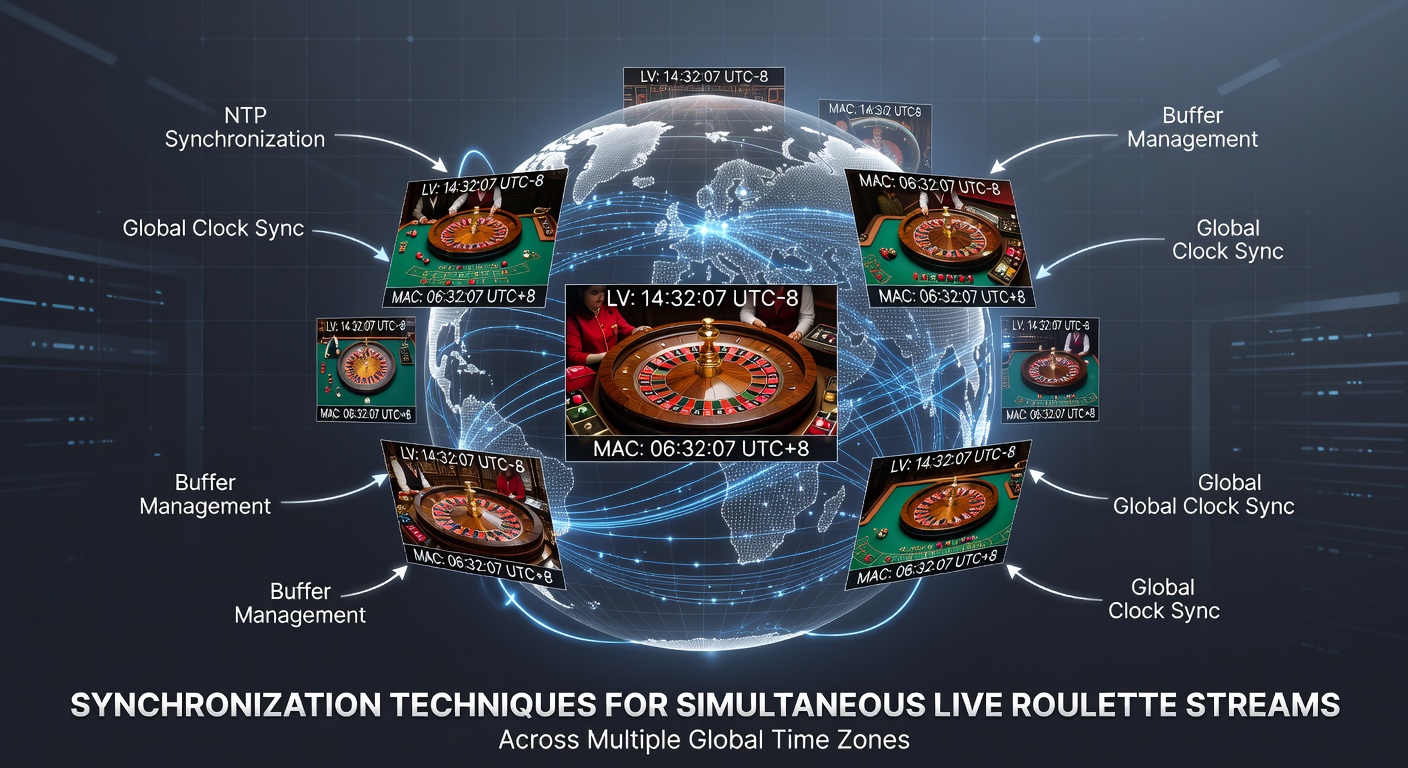
Synchronizing Live Roulette Streams Worldwide: Mastering Time Zone Coordination in Real-Time Gaming
Live roulette operations that run simultaneously across continents rely on precise coordination methods to deliver consistent experiences for participants regardless of their location, and operators achieve this through layered timing protocols combined with adaptive streaming architectures that adjust for latency variations in real time.
Core Timing Protocols in Global Broadcasts
Network Time Protocol and Precision Time Protocol form the foundation for aligning video feeds from physical roulette wheels located in different regions, while these systems maintain sub-millisecond accuracy by exchanging timestamp data between central servers and edge distribution points, and operators integrate them with GPS-derived references to counteract drift that occurs over extended transmission distances.
Studies from telecommunications research groups indicate that PTP achieves synchronization levels below one microsecond in controlled environments, which proves essential when multiple live tables broadcast the same spin sequence to audiences in Asia, Europe, and the Americas during overlapping peak hours.
Latency Compensation and Buffer Management
Adaptive buffering techniques allow streams to align visual outputs even when network delays differ by several hundred milliseconds between regions, and software algorithms monitor packet arrival times continuously before inserting calculated delays at receiving endpoints so that all viewers witness wheel outcomes at coordinated moments.
One documented approach involves predictive modeling that anticipates congestion patterns based on historical traffic data from undersea cable routes, and this method reduces desynchronization events that previously affected up to 12 percent of sessions according to industry performance logs collected through 2025.
Regional Regulatory Influences on Synchronization Standards
Agencies such as teh Malta Gaming Authority have outlined requirements for timestamp verification in live dealer environments, and these guidelines encourage operators to maintain audit trails that record synchronization events down to individual spin cycles, whereas similar expectations appear in frameworks from the New Jersey Division of Gaming Enforcement that emphasize transparent reporting of technical performance metrics.
Data compiled by the Australian Communications and Media Authority shows that cross-border streaming services handling real-money games processed over 2.4 million concurrent sessions monthly in early 2026, with synchronization failures dropping below 0.3 percent after widespread adoption of hybrid PTP-NTP setups.
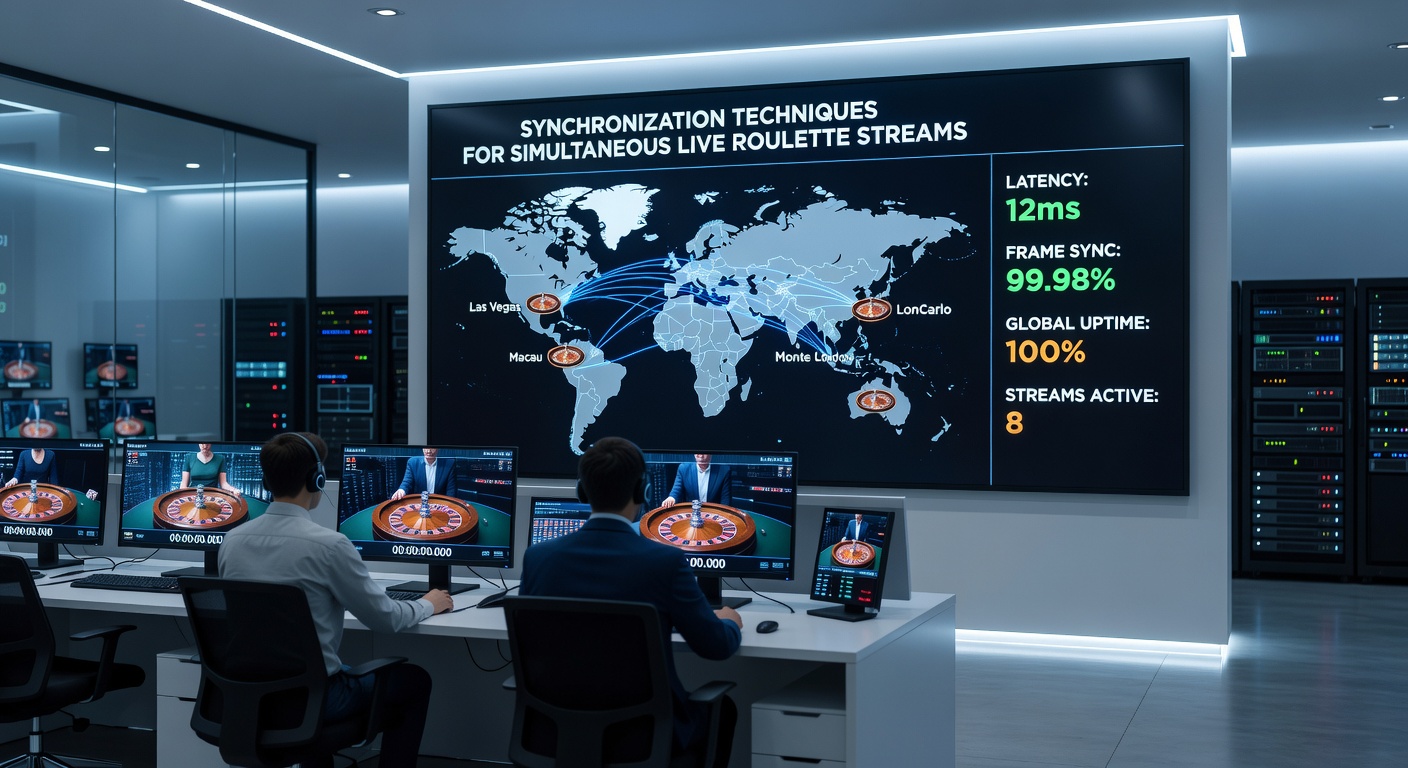
Software Architectures Supporting Multi-Zone Delivery
Content delivery networks equipped with regional edge nodes handle the distribution of encrypted video packets while applying localized time offsets that match each target zone, and these platforms use machine learning models trained on traffic samples to reroute streams dynamically when anomalies appear in specific corridors such as trans-Pacific links.
Engineers at major technology providers have implemented containerized microservices that isolate timing correction functions from core game logic, allowing independent updates without interrupting ongoing broadcasts, and this modular design supports rapid scaling during high-demand periods like major sporting events that coincide with prime gaming windows in June 2026.
Challenges in Maintaining Consistency
Variations in local internet infrastructure create persistent hurdles, particularly when viewers connect through satellite or mobile networks that introduce unpredictable jitter, yet operators counter these issues with forward error correction codes and redundant stream paths that activate automatically upon detecting quality drops.
Academic papers published in IEEE journals on distributed multimedia systems describe case studies where roulette operators tested multi-source synchronization across five continents, revealing that combined use of hardware timestamping and software interpolation maintained frame alignment within 40 milliseconds under diverse load conditions.
Future Developments in Stream Alignment
Emerging quantum timing references and enhanced 5G backhaul capabilities promise further reductions in baseline latency, and pilot programs scheduled for rollout later in 2026 aim to integrate these elements into existing live gaming infrastructures to support even denser simultaneous viewership across additional time zones.
Conclusion
Effective synchronization of live roulette streams across global time zones depends on integrated timing protocols, adaptive buffering, and regional network optimizations that collectively ensure uniform delivery regardless of geographic separation, and continued refinement of these techniques supports reliable operation as participation volumes expand into new markets.