Software Breakthroughs Driving Cross-Platform Wheel Games and Sustaining Player Interest
Sage Patterson · Aug 10, 2026

Software Breakthroughs Driving Cross-Platform Wheel Games and Sustaining Player Interest
Developers have integrated HTML5 frameworks with real-time physics engines to create wheel games that maintain consistent spin mechanics and visual fidelity across desktop, tablet, and smartphone environments, while cloud-based synchronization ensures session continuity when players switch devices mid-game. Research from industry reports shows that these adaptations reduce loading times by up to 40 percent on mobile networks compared to earlier native app versions, and data from multiple operators indicates higher completion rates for spins when the interface adjusts automatically to screen orientation and touch sensitivity.
Core Mechanics in Cross-Platform Implementations
Wheel game software now relies on unified random number generators certified by independent testing labs, combined with adaptive rendering that scales particle effects and wheel animations without altering outcome probabilities, whereas earlier platform-specific builds often introduced minor timing variances that affected perceived fairness. Engineers incorporate WebGL and GPU acceleration layers so that the same core simulation code runs identically whether accessed through a browser or a dedicated application, and this approach has allowed studios to deploy updates simultaneously rather than staggering releases by operating system. Observers note that integration with progressive jackpot systems across devices has become standard, with backend servers tracking contributions in real time regardless of player location or hardware.
Retention Patterns Shaped by Data Analytics
Analytics platforms collect granular metrics on spin frequency, session duration, and device transition points, then feed those insights into machine learning models that adjust bonus triggers and visual themes to individual play styles. Figures from North American operators reveal that personalized wheel variants, which alter reel speed or add temporary multipliers based on prior behavior, correlate with a 25 percent increase in return visits within a seven-day window. Studies conducted by academic teams at institutions such as the University of Nevada, Las Vegas, demonstrate that social features like shared leaderboards maintain engagement longer when they update instantly across platforms, reducing drop-off rates during peak evening hours in August 2026.
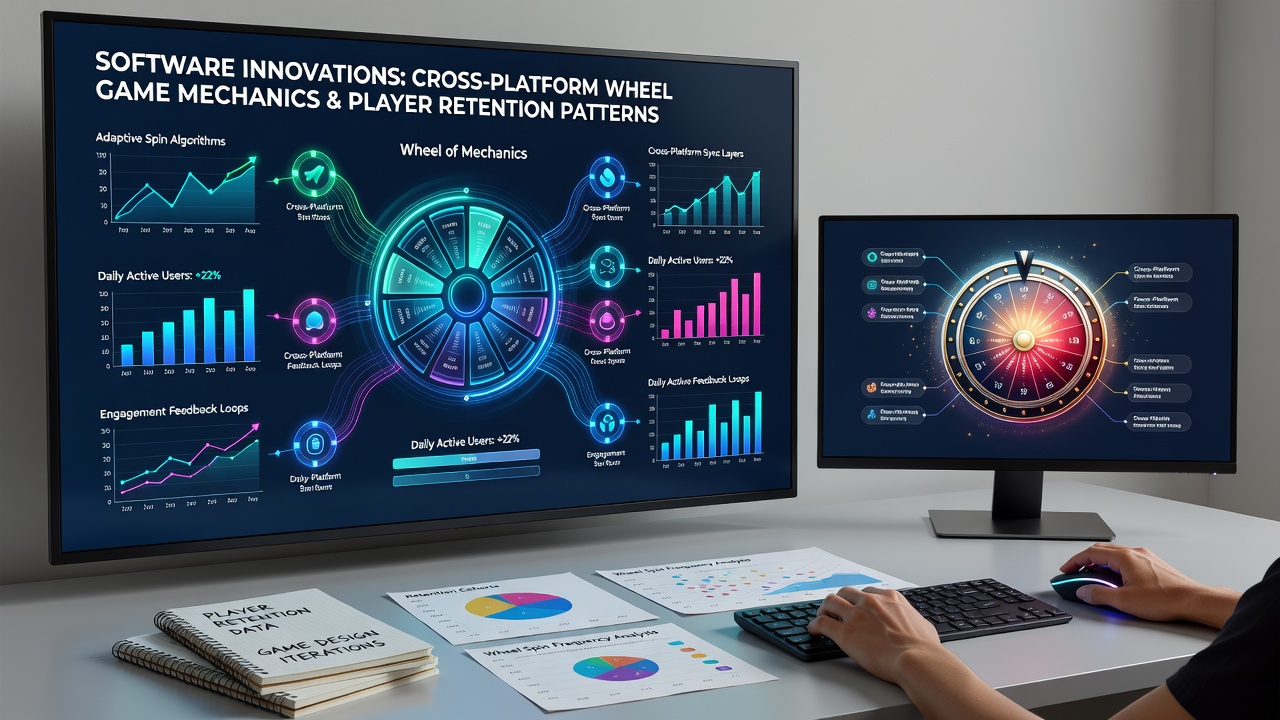
Push notification systems tied to account progress further extend retention by reminding users of accumulated loyalty points or upcoming limited-time wheel events, and operators report that these alerts perform best when timed according to each player's historical activity peaks rather than generic schedules. Australian regulatory data collected through the Northern Territory Government shows steady growth in multi-device play, with retention curves flattening less sharply after software teams introduced seamless cloud saves that preserve wheel state and pending bonuses.
Security and Compliance Layers Supporting Long-Term Play
Encryption protocols and token-based authentication have been standardized so that login sessions remain secure during device switches, while automated compliance checks verify that jurisdictional rules on wagering limits and age verification stay consistent regardless of access point. European authorities including the Malta Gaming Authority have documented fewer compliance incidents since cross-platform frameworks began enforcing real-time geolocation checks within the same code base used for game logic. Those implementations allow operators to apply region-specific responsible gaming tools, such as session reminders or deposit caps, without creating separate code branches that could introduce bugs or delays.
Future Directions in Wheel Game Software
Emerging work focuses on integrating augmented reality overlays that project wheel elements onto a player's physical surroundings through compatible mobile cameras, and early tests indicate these features boost session length when combined with existing retention mechanics. Canadian provincial regulators have begun reviewing standards for such hybrid experiences, ensuring outcome integrity remains tied to certified random generators even when visual layers change. Industry groups like the European Gaming and Betting Association continue to publish technical guidelines that encourage interoperability between different studios' wheel engines, which in turn supports broader player migration across operator platforms without loss of progress or loyalty status.
Conclusion
Software innovations centered on unified code bases, adaptive interfaces, and analytics-driven personalization have reshaped how wheel games operate across devices while supporting measurable patterns in player return rates. Data gathered through 2026 continues to highlight the value of synchronized mechanics and secure session management in sustaining engagement, with regulatory bodies from multiple regions providing frameworks that balance innovation with consumer protection.