Roulette's Family Tree: Tracing Variants from Classic Wheels to Modern Twists
Vera Keller · Mar 25, 2026
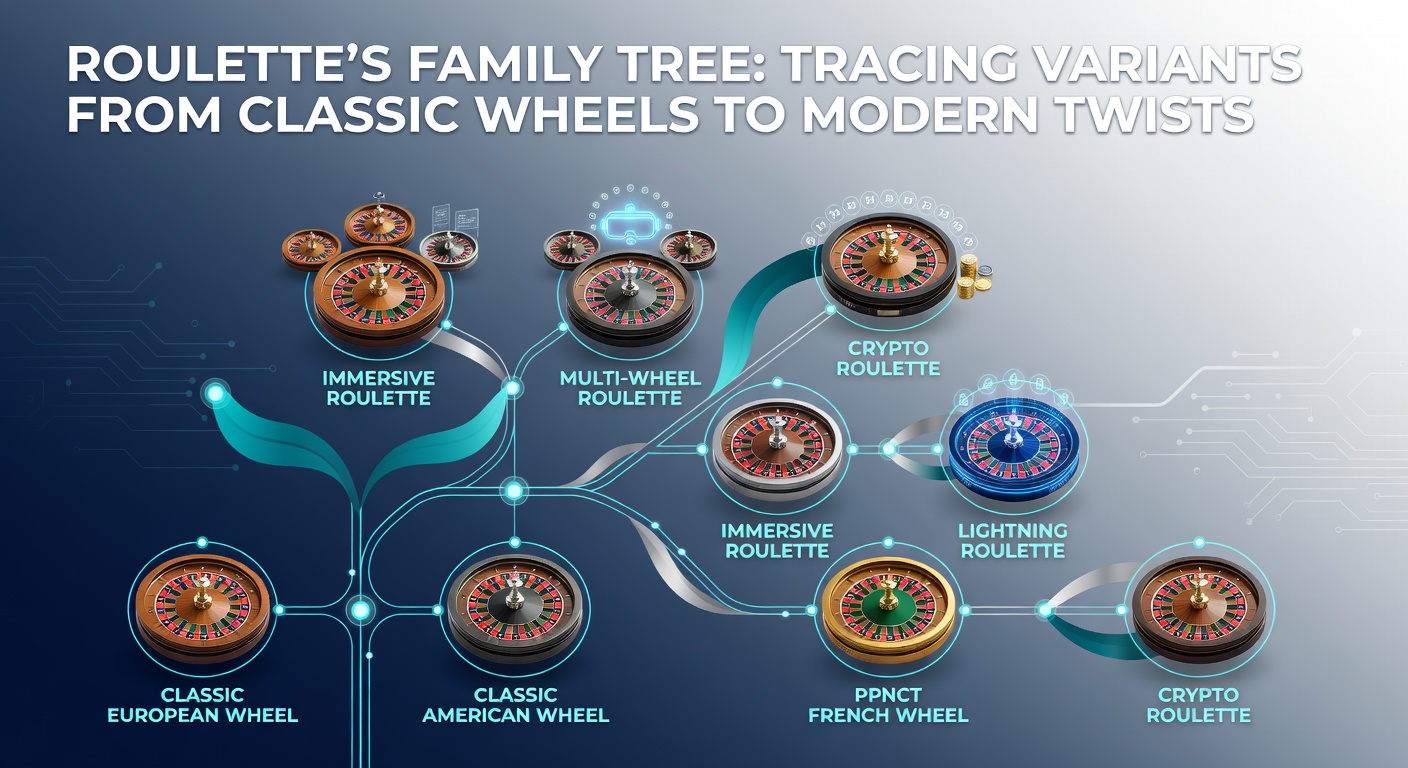
Roulette's Family Tree: Tracing Variants from Classic Wheels to Modern Twists
The Roots: Roulette Emerges in 17th-Century France
Researchers trace roulette's origins back to 17th-century France, where mathematician Blaise Pascal experimented with perpetual motion machines; those early wheels, blending chance with physics, laid the groundwork for the game players recognize today, although even earlier influences from ancient Chinese games and Italian board games like Biribi shaped its evolution. Experts point to the 1790s in Paris as the moment roulette crystallized into its familiar form, complete with a spinning wheel divided into numbered pockets, a betting cloth marked with red and black grids, and the iconic croupier calling out winning numbers. Data from historical records shows French casinos along the Riviera quickly adopted it, turning what started as a novelty into a staple by the early 1800s, while aristocrats and gamblers alike flocked to tables where the single-zero wheel promised a house edge of just 2.7 percent.
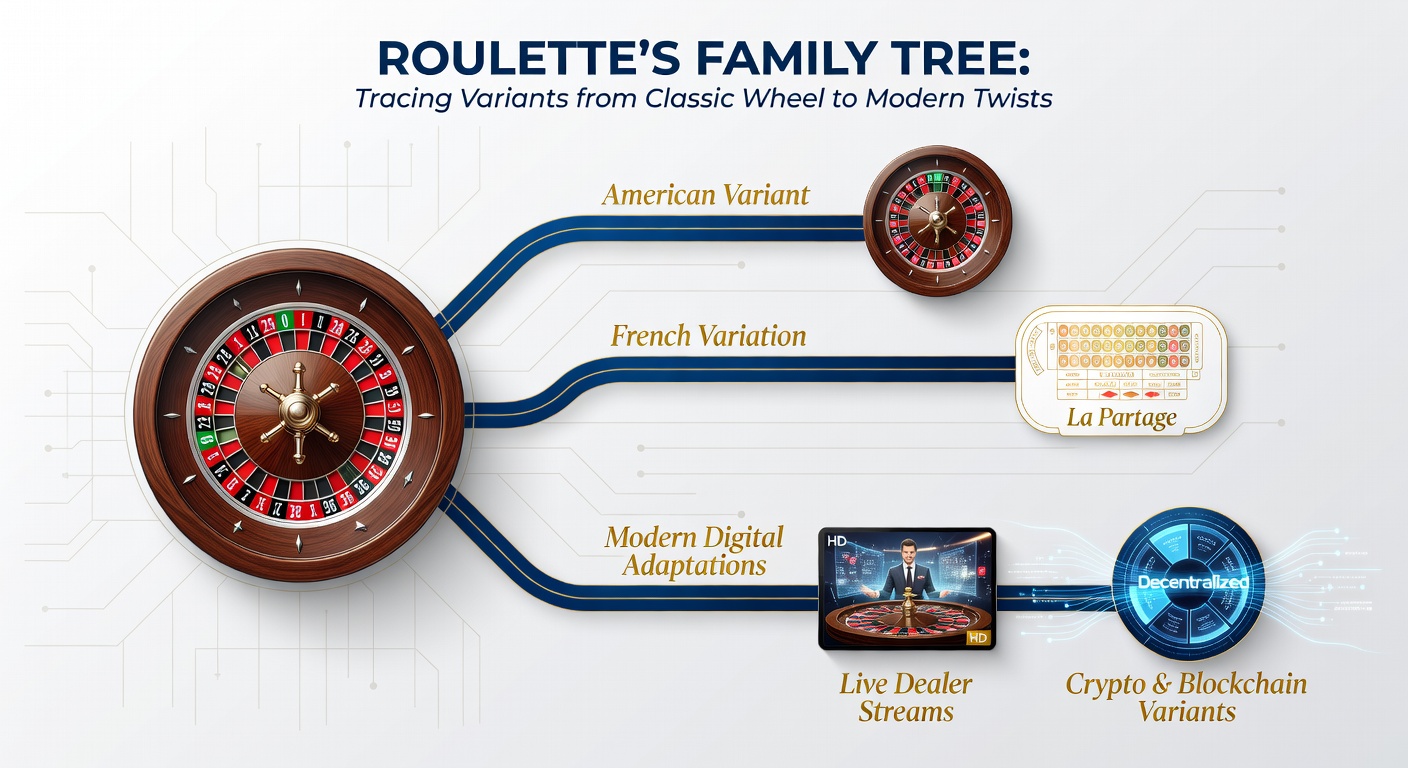
But here's the thing: that classic French variant, often called European roulette, stuck close to its roots with 37 pockets numbered 0 through 36; players bet on colors, odds and evens, or specific numbers, watching the ivory ball dance before settling into fate's choice. Studies from gaming historians reveal how subtle tweaks, like the "La Partage" rule in French roulette—where even-money bets lose only half on zero—emerged to soften the house advantage, a nod to player-friendly adaptations that spread across Europe. And as the game crossed borders, observers note its first major branch formed when it hitched a ride with émigrés fleeing the French Revolution, planting seeds in places like Germany and Monaco, where Monte Carlo's casino became synonymous with opulent roulette play by 1863.
Branching Out: American Roulette and the Double-Zero Divide
A pivotal split happened across the Atlantic in the mid-19th century, when roulette landed in New Orleans via European immigrants; casinos there, hungry for higher edges, introduced the double-zero wheel in the 1800s, bumping pockets to 38 with an extra 00, which jacked the house edge to 5.26 percent on most bets. Figures from the Nevada Gaming Control Board highlight how this American variant dominated U.S. floors, especially after legalization in places like Las Vegas during the 1930s, where neon-lit tables drew crowds chasing the dream of beating the odds. Take one observer who documented early Vegas scenes: players packed around felt layouts twice the size of European ones, shouting bets amid the clatter of chips, a far cry from the refined Monte Carlo vibe.
Yet that double zero sparked ongoing debates among players, since data indicates it tilts outcomes further toward the house, particularly on five-number bets hovering near 7.89 percent disadvantage; still, American roulette's faster pace and larger payouts on certain wagers kept it thriving, evolving into sub-variants like the wheel-within-a-wheel designs tested in Atlantic City casinos by the 1980s. What's interesting is how this branch influenced global play, with Australian venues adopting similar setups under regulations from state bodies, blending U.S. speed with local twists like mandatory even-money payouts.
Modern Twists: Digital Age Variants Reshape the Wheel
Fast-forward to the digital era, and roulette's family tree sprouts wild new limbs, starting with online adaptations in the late 1990s when Microgaming launched the first virtual wheels; these single-zero Europeans mirrored physical games pixel-perfect, but soon multipliers and side bets branched off, like in NetEnt's versions where lucky numbers boost payouts up to 500x. Research from the European Gaming and Betting Association shows how live dealer streams via Evolution Gaming exploded post-2010, piping real croupiers and wheels into homes, with March 2026 data revealing a 15 percent uptick in live roulette sessions across EU platforms as 5G networks sharpened streams. Players now engage with hybrids like Immersive Roulette, where multiple camera angles capture every spin in slow-motion drama, blending authenticity with tech flair.
Turns out, innovation didn't stop there; multi-wheel roulette emerged around 2010, featuring up to eight synchronized wheels for simultaneous bets, slashing wait times while keeping single-zero fairness, a hit in Canadian online markets regulated by provincial bodies. And Lightning Roulette, Evolution's 2018 brainchild, adds random multipliers from 50x to 500x on selected numbers, data indicates it accounts for over 20 percent of live game revenue in 2025 reports, drawing players who crave volatility beyond classic odds. One case stands out: a Swedish studio's Speed Roulette variant clocks spins under 25 seconds, per industry benchmarks, packing more action into sessions without altering core math.
Key Variants Breakdown
- European Roulette: 37 pockets, 2.7% house edge; standard since 1840s.
- French Roulette: Adds La Partage/En Prison rules, dropping even-money edge to 1.35%.
- American Roulette: 38 pockets with 00, 5.26% edge; U.S. staple.
- Mini Roulette: Just 13 pockets for quick, low-stakes play; popular in mobile apps.
- Multi-Ball Roulette: Multiple balls per spin, upping win chances; NetEnt innovation.
- Lightning & Power Variants: RNG multipliers on live wheels; post-2018 surge.
These offshoots reflect adaptation to player demands, with Asian markets favoring no-zero "Sichuan Roulette" or triple-zero mega-wheels in Macau-inspired designs, while Australian regulators approve low-edge digital twins for fair play. Observers note how VR roulette prototypes, tested in U.S. labs by 2024, immerse users in 360-degree casinos, hinting at branches yet to fully leaf out.
Global Spread and Regulatory Branches
Across continents, roulette morphs under local rules; in Canada, Ontario's iGaming rollout in 2022 standardized live variants with single-zero preferences, per provincial gaming data, while Brazil's emerging market eyes Portuguese-wheel adaptations amid 2026 legalization talks. South African casinos stick to American styles but layer on progressive jackpots, and even India sees underground Bollywood-themed apps echoing classic layouts. It's noteworthy that despite tweaks, core physics—wheel bias, ball velocity—remain constants, as studies from university labs confirm no variant escapes the house edge long-term.
Now, with March 2026 seeing Australian online platforms report 12 percent growth in roulette traffic (thanks to state oversight bodies), the game's tree keeps expanding, fueled by crypto integrations in offshore sites and AI-predicted spins in beta tests. People who've tracked this evolution often discover patterns: classics endure for purists, while flashy twists hook high-rollers, ensuring roulette's branches entwine across borders.
Conclusion
Roulette's family tree starts simple with Pascal's wheel in France, branches boldly into American double-zeros and European refinements, then explodes into digital multipliers and live spectacles that define modern play; data underscores its resilience, from Monte Carlo's elegance to Vegas neon and beyond, with March 2026 metrics showing sustained popularity amid tech-driven variants. Experts observe that while house edges vary—2.7 percent in Europeans versus 5.26 in Americans—the thrill of the spin binds every leaf, a testament to centuries of adaptation without losing the game's beating heart.