Inside the Labs: How Software Studios Engineer Secure RNG Systems for Portable Wheel Games on Smartphones
Uma Flores · Jul 24, 2026

Inside the Labs: How Software Studios Engineer Secure RNG Systems for Portable Wheel Games on Smartphones
Core Principles Behind RNG Design for Mobile Wheel Games
Software studios building portable wheel games for smartphones rely on random number generators that meet strict statistical standards while operating within the constraints of mobile hardware, and these systems draw entropy from multiple sources including device sensors, processor timing variations, and operating system APIs. Engineers combine hardware noise with cryptographic post-processing to produce sequences that pass tests such as the NIST SP 800-22 suite, and they integrate these generators into game loops so each wheel spin draws fresh values without predictable patterns. Researchers at institutions like the University of Waterloo have documented how mobile processors can supply sufficient entropy when combined with deterministic random bit generators that reseed at regular intervals.
Hardware and Software Integration in Studio Environments
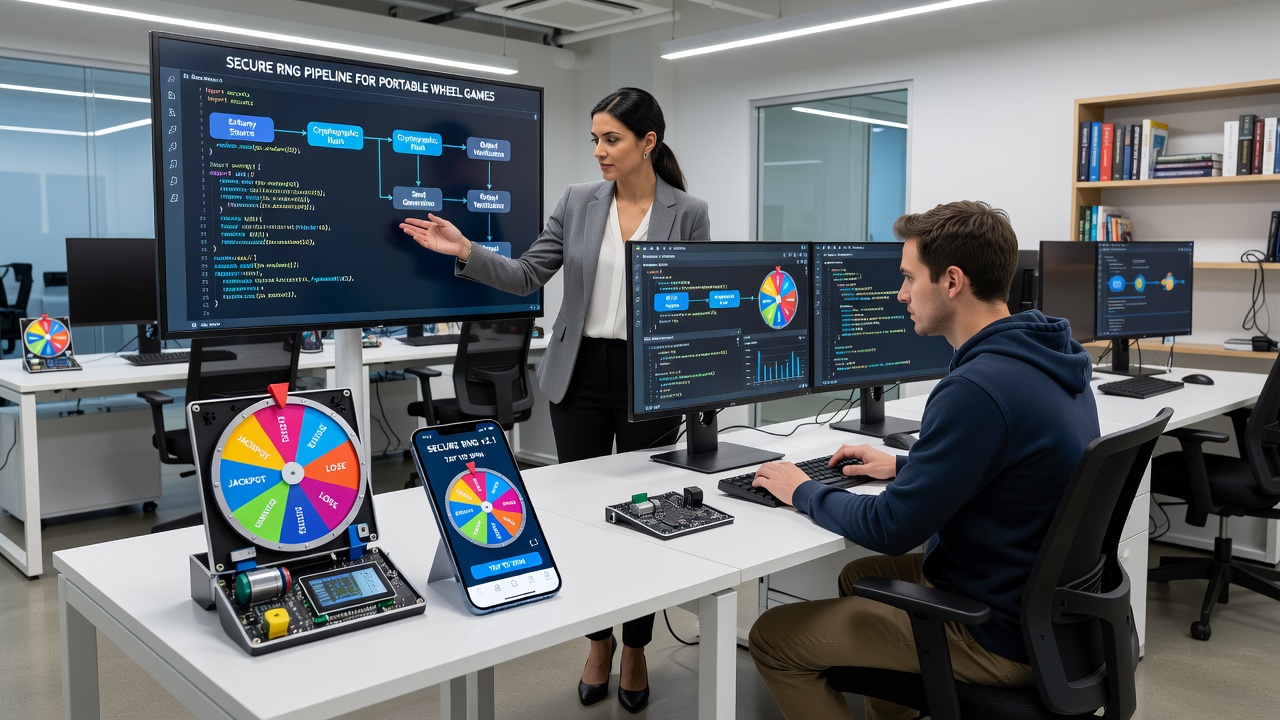
Development teams set up isolated test rigs that mirror commercial smartphone chipsets from manufacturers such as Qualcomm and MediaTek, then they run continuous entropy collection routines while monitoring temperature fluctuations and power states that affect sensor output. Studios implement hybrid RNG architectures where an initial seed comes from the hardware random number generator present in modern ARM processors, after which a cryptographically secure pseudorandom number generator like AES-CTR or ChaCha20 expands that seed into the volume of numbers required for gameplay. Data from industry reports shows that studios perform thousands of dieharder and TestU01 statistical test runs before certifying each build, and these procedures catch correlations that might appear only under specific network latency or battery conditions.
Certification Pathways and Regulatory Benchmarks
Independent testing laboratories evaluate RNG implementations against jurisdictional requirements, and companies often submit builds to bodies such as the Malta Gaming Authority or the Alcohol and Gaming Commission of Ontario for third-party verification. In July 2026 several studios updated their mobile wheel titles to align with revised technical standards issued by the Australian Communications and Media Authority, which introduced additional requirements for entropy source documentation and continuous monitoring of RNG output during live operation. Engineers document every reseeding event and maintain audit logs that regulators can request, while automated monitoring tools flag deviations from expected statistical distributions within milliseconds of detection.
Security Measures Against Prediction and Tampering
Development teams apply side-channel countermeasures so that timing attacks or power analysis cannot reveal internal RNG states, and they isolate RNG modules from other application processes through sandboxing techniques provided by iOS and Android security frameworks. Studios also conduct penetration testing that simulates an attacker who has gained access to device memory or network traffic, and they verify that even partial knowledge of prior outputs does not allow reconstruction of future values. Academic papers published through IEEE conferences describe how forward and backward security properties are verified by running extensive simulations on emulated devices before deployment.
Performance Optimization for Battery and Network Constraints
Mobile wheel games must deliver RNG values quickly enough to maintain smooth animations while conserving battery, so engineers pre-generate batches of numbers during periods of low activity and store them in encrypted memory buffers that refill automatically. They measure the energy cost of each entropy collection call and adjust reseeding frequency accordingly, and field data collected from millions of sessions shows that optimized implementations reduce CPU load by up to thirty percent compared with naive approaches. Studios also implement fallback mechanisms that switch to alternative entropy sources when primary sensors become unavailable, such as during airplane mode or when location services are disabled.
Continuous Monitoring and Post-Deployment Updates
After release, studios maintain telemetry pipelines that collect anonymized statistical summaries of RNG output without transmitting personal data, and these pipelines trigger alerts when any metric falls outside calibrated thresholds. Game updates frequently include refreshed seed material or algorithm tweaks that address newly discovered weaknesses in underlying libraries, and developers coordinate with platform vendors to incorporate improvements present in new operating system releases. Observers note that this lifecycle approach keeps mobile wheel titles compliant even as smartphone hardware evolves and new regulatory guidance appears.
Conclusion
Secure RNG engineering for smartphone wheel games combines hardware entropy collection, cryptographic expansion, rigorous statistical testing, and ongoing regulatory compliance into a single workflow that studios refine continuously. The result is systems that deliver unpredictable outcomes across diverse devices while satisfying technical standards set by multiple international authorities.