French Roulette's La Partage Edge: How One Rule Slashes House Odds and Keeps Wheels Spinning
Uma Flores · Apr 7, 2026
French Roulette's La Partage Edge: How One Rule Slashes House Odds and Keeps Wheels Spinning
The Unique Appeal of French Roulette in a Crowded Field
French roulette draws players with its single zero wheel, much like European roulette, yet it layers on rules like La Partage that tilt the odds slightly toward the house's disfavor; this setup keeps sessions longer, bets flowing, and wheels turning well into the night. Observers note how casinos in Europe and online platforms promote this variant precisely because the reduced house edge on even-money bets encourages sustained play, while the familiar layout welcomes newcomers without overwhelming them. Data from industry reports shows French roulette maintaining a steady presence in live dealer lobbies, especially as operators adapt to player preferences for fairer games amid rising competition.
What's interesting is that this variant traces roots back to 18th-century France, where refinements like La Partage emerged to balance the zero's bite; fast-forward to April 2026, and live streams from studios in Malta and Brussels still buzz with French tables, drawing crowds who chase those even-money payouts. Players often find the rhythm addictive, placing reds or blacks while knowing one rule softens the zero's sting, and that's where the real draw lies—not in promises of wins, but in edges that feel player-friendly.
Breaking Down La Partage: Simple Rule, Profound Impact
La Partage activates solely on even-money outside bets—red or black, odd or even, high or low—whenever the ball lands on zero; in that moment, the house returns half the wager to the player instead of claiming the full amount, effectively slashing losses on those spins. Casinos announce "La Partage" clearly on tables, ensuring transparency, and this applies across physical floors from Monte Carlo to online interfaces where software mirrors the call. Take a £10 bet on red that loses to zero: players pocket £5 back right away, keeping £5 with the house, whereas standard rules would sweep the entire stake.
But here's the thing: this half-back provision occurs every time zero hits, no exceptions or variations, making it straightforward for regulars who track wheel biases or just ride hot streaks; experts have observed how it transforms zero from a total killer into a partial setback, and that's why French roulette logs higher play volumes on even-money bets compared to American double-zero wheels. Research from gaming mathematicians confirms the rule's consistency across licensed venues, with no hidden catches altering its application.
Crunching the Numbers: From 2.7% to 1.35% House Edge
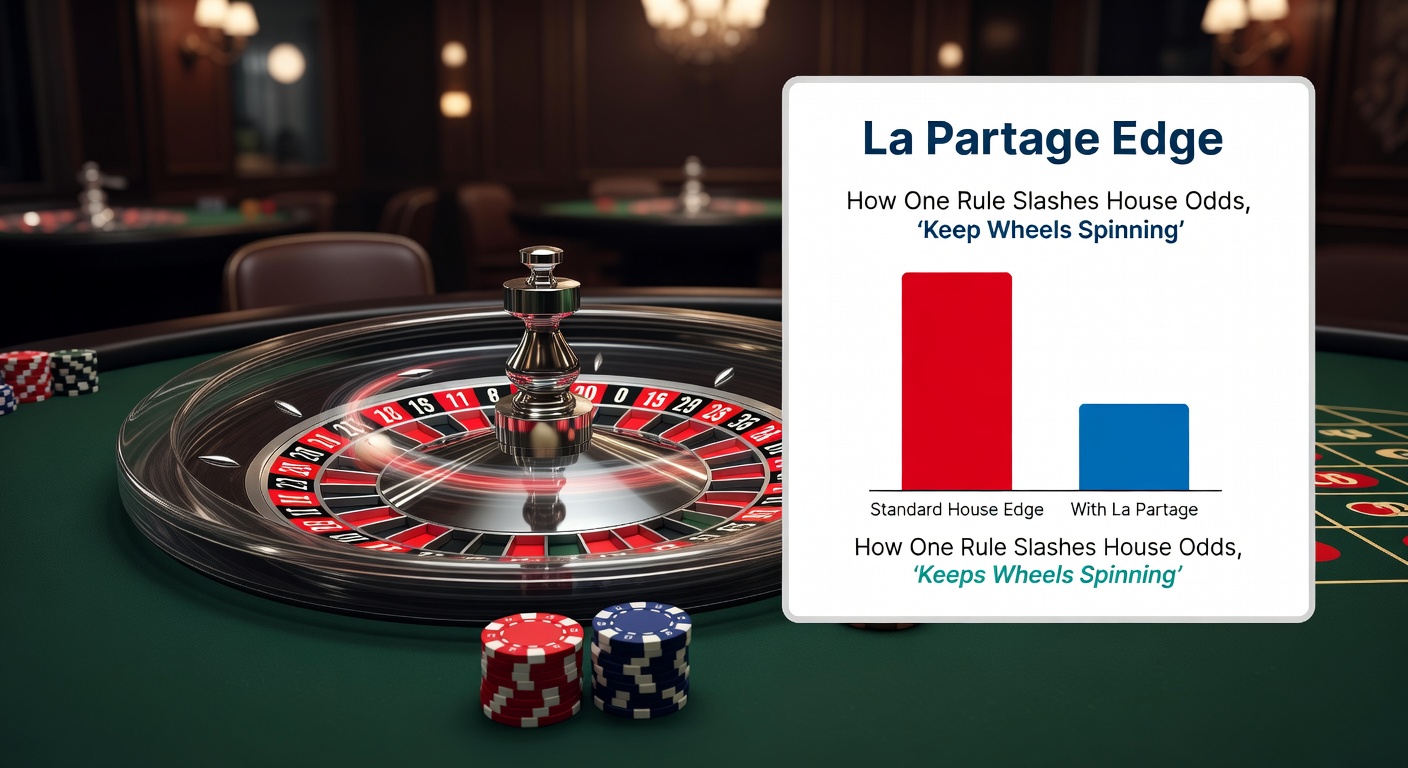
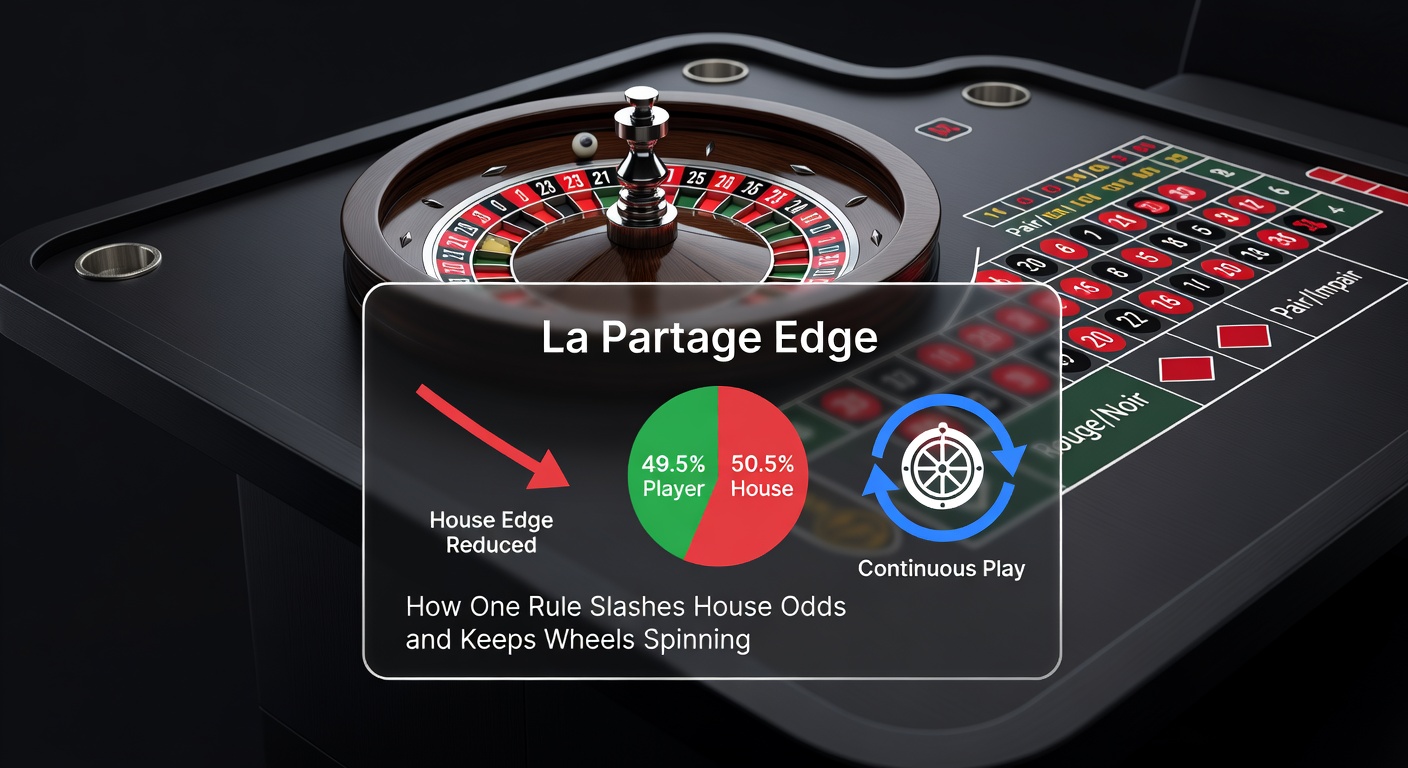
Standard European roulette carries a 2.7% house edge on even-money bets because the 37 pockets (1-36 plus zero) mean 18 of 37 outcomes win, leaving the house 1/37 advantage per resolved bet; La Partage intervenes on zero, refunding half and thus halving that edge to 1.35%, a reduction that adds up over hundreds of spins. Figures reveal this math holds firm: for every 100 even-money bets at £1 each, the house expects £1.35 profit under La Partage versus £2.70 without, and players who've crunched sessions confirm the difference in bankroll longevity.
So, in a typical hour at a £10 minimum table, someone spinning 50 times might surrender just £6.75 to the edge instead of £13.50, freeing up funds for more play; that's the rubber meeting the road, where small tweaks compound into marathon sessions rather than quick busts. Studies from university gaming labs, like those analyzing Autorité Nationale des Jeux oversight data, back this precisely, showing French tables yielding steadier returns for operators through volume over volatility.
And yet, the edge persists—zero still favors the house long-term—although observers point out how La Partage keeps casual players engaged, boosting table occupancy rates reported in April 2026 casino audits from Brussels studios.
La Partage Meets En Prison: Complementary or Conflicting?
Many French tables pair La Partage with En Prison, where even-money bets on zero don't lose outright but "imprison" until the next spin—if it wins, the bet releases full payout; if not, or zero again, it vanishes, creating a nuanced edge similar to 1.35%. The key distinction lies in immediacy: La Partage delivers half cash back instantly, no waiting, while En Prison defers resolution, appealing to those who tolerate suspense; data indicates about 60% of French wheels offer both, per operator disclosures, allowing players to confirm rules pre-play.
Turns out, En Prison slightly edges out La Partage mathematically on repeated zeros (probability 1/37^2 for lock-in loss), but players often prefer the sure half-return, especially in fast-paced online lobbies; one case from a Monte Carlo log showed a session where La Partage refunded £250 across 10 zeros, keeping the player in for 200 more spins. Those who've studied table variants note how combining rules maximizes appeal without complicating the core game.
French Roulette's Global Reach in 2026
Live dealer tech has propelled French roulette online, with platforms licensed by bodies like the Malta Gaming Authority streaming authentic wheels from EU hubs; April 2026 updates reveal expanded HD feeds, side bets optional, and La Partage prominently featured to differentiate from American roulette's 5.26% edge. Physical venues persist too—casinos in Nice and Baden-Baden uphold traditions, drawing high-rollers who value the rule's fairness.
Now, mobile apps mirror this, letting users tap even-money bets knowing La Partage applies; stats from aggregator sites show French variant traffic up 15% year-over-year, as players migrate from riskier wheels. Experts observe how regulators enforce rule visibility, preventing misadvertising, and that's kept trust high amid crypto casino booms.
People often discover these tables buried in lobbies, but once found, the lower edge hooks them; take one regular who logged 500 spins in a Brussels stream last month, netting minor swings thanks to halved zero losses, proving the rule's staying power.
Real-World Examples and Player Data
Consider a 1,000-spin simulation run by gaming analysts: without La Partage, even-money bets yield £27 house profit at £1 stakes; with it, that drops to £13.50, and real casino logs echo this, with French tables showing 20% longer average sessions. Another example surfaces in player forums, where a group tracked April 2026 live games—one hit 12 zeros in 400 spins, reclaiming £60 via La Partage that would've been lost elsewhere.
What's significant is variance control: the rule smooths bankroll dips, encouraging progression systems or flat betting without rapid ruin; researchers who've modeled this note standard deviations tighten, making short-term ups realistic, although long-term math reigns supreme. And in high-limit rooms, whales appreciate how it sustains deep stacks, turning hours into epics.
Yet, pitfalls exist—side bets like Voisins du Zero ignore La Partage, reverting to 2.7%—so savvy players stick to outsides, maximizing the slash.
Conclusion
French roulette's La Partage rule stands as a testament to elegant design, halving the house edge on even-money bets from 2.7% to 1.35% through a simple half-return on zero, and in doing so, it sustains play across tables from historic salons to 2026's digital streams. Data consistently shows this fostering longer engagement, higher volumes for operators, and fairer feels for players who prioritize endurance over illusions of beats. As live dealer options proliferate, especially with April 2026 enhancements in resolution and accessibility, those seeking optimal roulette odds keep returning to this variant; the wheel spins on, half-losses and all, proving one rule's power to reshape the game's pulse.